
🔴 Website 👉 https://u-s-news.com/
Telegram 👉 https://t.me/usnewscom_channel
OAN Staff Brooke Mallory
5:30 PM – Wednesday, March 25, 2026
In an escalation of both military and diplomatic tension, Iran on Wednesday officially dismissed a ceasefire proposal from the United States, responding with a set of its own “non-negotiable” demands.
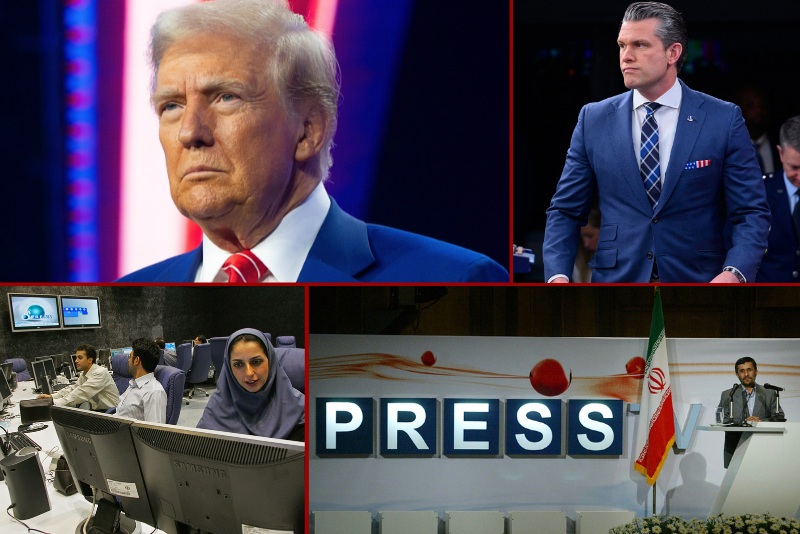
The rejection came as Iranian state media, Press TV, quoted an unnamed senior official declaring that Tehran would only end the conflict “when its own conditions are met.” The “senior official” remains unnamed.
While the diplomatic path faces challenges, it exemplifies an urgent and renewed global commitment to stabilizing the security landscape across the Middle East.
Although the White House maintains that productive talks are ongoing, Iranian drones and missiles continue to strike regional targets, including a significant assault that ignited a major fire at Kuwait International Airport on Wednesday.
The U.S.-led proposal, transmitted to Tehran via Pakistani intermediaries, sought a comprehensive pause to the conflict that began on February 28th under Operation Epic Fury.
According to diplomatic sources, the U.S. proposal included:
- Nuclear & missile rollback: The total dismantling of Iran’s nuclear facilities and strict limitations on its ballistic missile range.
- Maritime access: The immediate and permanent reopening of the Strait of Hormuz, where a near-total blockade has already removed 11 million barrels of oil per day from the global market.
- Sanctions relief: A tiered structure of economic relief in exchange for verified compliance.
This included a roadmap for economic relief, but it is highly conditional. Unlike previous deals, the Trump administration’s approach is described by sources as a “tiered” or “phased” mechanism. Initial relief would likely focus on humanitarian channels and frozen assets. Fuller economic normalization is also contingent on verified compliance with much stricter nuclear and missile curbs than in the past.
- Regional security: A cessation of Iranian support for armed proxies across Lebanon, Iraq, and Yemen.
Diplomatic sources indicate that the U.S. is demanding a cessation of support for the “Axis of Resistance” — specifically mentioning groups in Lebanon (Hezbollah), Yemen (Houthis), and Iraq.
Meanwhile, White House Press Secretary Karoline Leavitt maintained a firm stance on Wednesday afternoon, stating that while the U.S. remains at the table, President Trump is prepared to “unleash hell” on Iran’s energy infrastructure if a deal is not reached within a four-day window.
Tehran’s response, broadcast via state-controlled outlets, blatantly ignored the U.S. demands for disarmament, instead pivoting to a Iran-led “five-point plan.”
Tehran’s demands reportedly include:
- Cessation of assassinations: An immediate end to the targeted killings of Iranian leadership and military officials.
- War reparations: Financial compensation for the extensive damage caused by U.S. and Israeli airstrikes since the start of the conflict.
- Sovereignty over Hormuz: Formal recognition of Iran’s “exercise of sovereignty” over the Strait of Hormuz — presumably a non-starter for Washington D.C.
- Security guarantees: Binding mechanisms to ensure no future “acts of aggression” are waged against Iranian soil.
- Hostility termination: A total withdrawal of foreign forces from the immediate Persian Gulf theater.
As diplomatic efforts and competing proposals between the U.S. and Iran continue, the Pentagon has accelerated its military back-up in the Middle East.
According to surfacing reports, the U.S. military is reportedly preparing to deploy at least 1,000 troops from the 82nd Airborne Division to the Middle East in the coming days.


The deployment includes elements of a battalion from the division’s 1st Brigade Combat Team, which is currently serving as the Immediate Response Force, along with Maj. Gen. Brandon Tegtmeier, the division commander, and his staff.
This adds to roughly 5,000 Marines and thousands of sailors whose deployments have been rerouted or accelerated, and those that are already en route or beginning to arrive.
U.S. officials have described the current outreach as a “testing phase” to identify viable negotiating partners inside Iran, with Iran’s Parliament Speaker Mohammad Bagher Qalibaf reportedly being floated by some administration sources as a potential channel. However, Qalibaf and other Iranian officials have also strongly denied that any negotiations with the United States are taking place.
As Israel continues to pursue its security objectives and Iran maintains firm defensive rhetoric while issuing its own counterproposal, President Trump has already announced a five-day pause in U.S. strikes on Iranian energy infrastructure and power plants — leading some analysts to suggest that this was a strategic decision in order to facilitate more “U.S.-favored” negotiations.
Stay informed! Receive breaking news alerts directly to your inbox for free. Subscribe here. https://www.oann.com/alerts
What do YOU think? Click here to jump to the comments!
Sponsored Content Below